

Holiday season has a very specific way of testing your dining room. Suddenly that table you barely notice in July becomes the center of everything. It is where family sits for hours, where extra leaves are dragged out of storage, where kids squeeze in on the ends, where platters and pies and overflow side dishes all compete for space. If you have ever stood in your dining room, looked at your table, and wondered, “Is this really big enough for everybody?” you are exactly who this guide is for.
Choosing the right dining table size is partly about aesthetics, but mostly about comfort and function. During the holidays, those practical questions become impossible to ignore. Do you have enough seating for 6, 8, or 10 people without everyone knocking elbows? Is there room to walk behind chairs when people are seated? Can you fit serving dishes down the center of the table without crowding out plates and glasses? Does the table size fit your room, or does it overwhelm the space? These are the questions that this long-form, flowing guide will walk you through, step by step.
At Bel Furniture, we help people across Texas answer these questions every day. Shoppers come in saying they need “a table for big family gatherings” or “something that seats 8 or more for Thanksgiving” or “a holiday dining table that still works for everyday meals.” Often they are not just choosing a style; they are trying to get the size right. A table that is too small means awkward holidays where people feel jammed together and dishes have nowhere to land. A table that is too large can make the room feel cramped or empty the rest of the year. The sweet spot is a table that fits your room, fits your people, and flexes a bit when you host.
Why Dining Table Size Matters Even More During the Holidays
On a random Tuesday, your dining table might only host two people and a laptop. The stakes are low. But when the holidays roll around, that same table may need to handle your entire extended family, extra friends, and maybe even neighbors who drop in for dessert. Suddenly the size of the table is not theoretical; it shows up in how comfortable everyone feels.
During holiday gatherings, meal times are longer. People linger at the table, they talk between courses, they pass dishes back and forth. If each person only has a slim slice of table edge, they end up bumping elbows, shifting their chairs, and balancing things on the edges of plates. Most design and furniture experts recommend allowing around twenty-two to twenty-four inches of table edge per person as a comfortable guideline, a number that shows up again and again across professional dining table size guides.
The holidays also bring more “table traffic.” Not only do you have place settings in front of each seat, but you also have serving platters, bowls, bread baskets, candles, centerpieces, and sometimes decorative greenery. A table that barely fits the number of chairs might technically seat eight, but if it is too narrow, there may be no room left down the center for dishes. That is why most dining table size guides suggest a width of roughly thirty-six to forty-eight inches for a rectangular dining table. Within that range, you get enough space for plates on both sides and still have a comfortable strip in the middle for food, decor, or both.
Then there is the space around the table. A holiday dining table rarely exists alone; it lives in a room with walls, a buffet or china cabinet, perhaps a door to the patio, and walkways to the kitchen. If chairs are jammed too close to a wall or another piece of furniture, guests struggle to pull them out and get into their seats. Many dining room guides suggest leaving at least thirty-six inches of clearance between the table edge and any wall or large furniture, and ideally a little more if the room allows.

Start with Your Holiday Hosting Style
Before you look at numbers, take a moment to think about what your holiday gatherings actually look like. Not the perfect version you see in movies, but the real way your family spends those days.
Some homes have a very traditional sit-down meal where everyone gathers around the dining table at the same time. In that scenario, the table itself is the star, and seating counts and table size are the top priority. Other homes lean more toward buffet-style serving. People come and go, some sit at the dining table, others perch at the kitchen island or on the sofa with plates on their laps. In those households, the dining table still matters, but it may not have to hold every single guest at once.
Ask yourself how many people you realistically want to seat in one sitting at your holiday dining table. Maybe you are a family of four but regularly host grandparents and another couple, so seating for six is your baseline. Maybe you have adult children who bring partners and kids of their own, and during Christmas you routinely have eight or ten. Perhaps your home is the designated gathering spot for a large extended family, and the number pushes beyond ten most years.
Think about your ideal scenario, not just what you barely get by with now. If your current table technically seats six but holidays feel cramped and you end up dragging in mismatched chairs from other rooms, that is a sign that the table is undersized for your real needs. When you are choosing a new table at Bel Furniture, you want to design for the way you actually live and host, not the way you compromise.
It can help to picture some specific moments. Imagine Christmas dinner with your usual crowd. Do you want everyone at one big table, or does it feel more natural to have a “kids’ table” nearby? Does your dining room have space for that, or would you rather invest in a table that comfortably seats eight or ten adults at once? There are no right or wrong answers here, only honest ones. Your answers will influence whether you should focus your dining table size guide thinking on seating for 6, seating for 8, or seating for 10 and beyond.

Measuring Your Dining Space: The Numbers Behind Comfort
Once you know how many people you’d like to seat, the next step is understanding what your room can realistically hold. You do not need advanced software for this; a tape measure, a notepad, and a clear idea of where the table will sit are enough.
Begin by measuring the length and width of the area where you intend to place the table. If you have a dedicated dining room, that is straightforward. If your dining table lives in an open-concept space between the kitchen and living room, try to mentally outline the rectangle that truly belongs to dining. You might use the edge of a rug, a window, or a light fixture as a boundary.
Many professional buying guides suggest a simple formula for figuring out the maximum dining table size your room can accommodate. Measure the length of the room, subtract six feet, and that gives you a rough maximum table length. Do the same for the width. The idea behind subtracting six feet is that it automatically leaves you about three feet of clearance between the table and the walls or other large pieces of furniture on all sides, which is a commonly recommended minimum.
Imagine you have a dining room that is twelve feet by ten feet. Subtracting six feet from each dimension leaves you with a “safe” table footprint of about six feet by four feet. That translates neatly into a rectangular table around seventy-two inches by forty-eight inches. A table in that size range can often seat six quite comfortably and, depending on leg placement and chair design, sometimes eight in a pinch.
Clearance matters even more during holiday gatherings, when guests might stand up and sit down more frequently, children might weave in and out of the room, and you may be carrying hot dishes or fragile platters. Leaving at least thirty-six inches and, when possible, closer to forty-two to forty-eight inches between the table edge and major obstacles gives you breathing room that your future self will be very grateful for.
As you measure, do not forget to account for other furniture. If you have a buffet, hutch, bar cabinet, or console table along one wall, make your measurements from the front of those pieces, not the wall behind them. The table does not care where the wall is; it cares how close it is to the thing your chairs will hit.
This measuring step is where reality and aspiration meet. You may dream of a ten-seat harvest table, but if your dining area is small, a large extendable table that opens to ten only a few times a year may be the better approach than a permanently oversized table that overwhelms the room. Bel Furniture carries many dining sets with leaves or extension mechanisms that are perfect for this scenario.

Understanding the Basics: A Practical Dining Table Size Guide
With your room measurements in hand and your hosting style in mind, it is time to dig into the heart of the dining table size guide: how long and how wide a table should be to seat a given number of people comfortably.
Across a wide range of furniture brands and design resources, there is a consistent rule of thumb: plan around about twenty-two to twenty-four inches of table edge per person.
That means, very roughly, that every two feet of table length yields one normal seat along that side. Corner seats and table legs complicate things a bit, but this simple rule gives you a starting point.
For rectangular tables, many modern guides suggest that a table intended to seat six people will generally be somewhere around sixty to seventy-two inches long and about thirty-six to forty inches wide. For eight people, the length often climbs into the seventy-two to ninety-six inch range, again around thirty-six to forty-four inches wide. For ten people, you are usually looking at lengths in the ninety-six to one hundred twenty inch range with similar widths, though exact numbers vary by design.
Think of it this way. A six-seat rectangular table normally has two or three people per long side and one at each end. If you follow the twenty-four-inch guideline, three people along one side need about seventy-two inches of length to feel spacious, while two per side could manage with about forty-eight inches. Tables in the sixty to seventy-two inch range therefore give you a flexible sweet spot for seating for 6 that can sometimes squeeze in a seventh chair if a child shows up “out of nowhere” at the last minute.
When you move up to seating for 8, you are most often putting three people on each long side and one at each end. Using the same math, three per side at twenty-four inches apiece leads you to about seventy-two inches of length, but that is a tight eight if the table legs and chair styles are not friendly. Many guides recommend lengths in the eighty-four to ninety-six inch range for a more generous eight-seater, especially when you are hosting long holiday meals where no one wants to feel squeezed.
For seating for 10, the numbers rise again. To seat four on each long side plus one at each end, you quickly approach ninety-six inches and beyond. That is why tables advertised as ten-seaters are frequently in the ninety-six to one hundred twenty inch range, with widths staying in that thirty-six to forty-four inch band to leave room for centerpieces and serving dishes.
These are not rigid rules, but they are grounded in the way human bodies and place settings occupy space. They also assume standard dining chairs rather than oversized, throne-like chairs. If you fall in love with very wide or arm-heavy chairs at Bel Furniture, you may want to be conservative and assume closer to twenty-four inches per person instead of twenty-two when doing your mental math.

Rectangular Tables: Classic Choice for Seating for 6, 8, and 10
Rectangular dining tables are the most common shape for holiday dining and for good reason. They echo the shape of most dining rooms, line up nicely with buffets and sideboards, and make it easy to extend the length with leaves when you need to go from seating for 6 to seating for 8 or 10.
Imagine three different families shopping at Bel Furniture in November.
The first family has a modest dining space and usually hosts six people for Christmas dinner: two parents, two children, and two grandparents. A rectangular table around sixty-six to seventy-two inches long and about thirty-six to forty inches wide is likely to serve them beautifully. Along each long side, they can comfortably sit two adults and one child, with a grandparent at each end if they like that arrangement. There is enough tabletop depth to run a simple centerpiece and place a few shared dishes in the middle. Because they checked their room measurements ahead of time, they know this size still leaves ample clearance on all sides, so grandma’s chair will not scrape against the wall every time she stands up. This is a practical, human-scaled example of a dining table size guide for seating for 6 in action.
The second family regularly hosts eight to ten people. Four kids, two parents, a sibling or two with partners, maybe a friend who joins each year. For them, a rectangular holiday dining table that starts around seventy-eight to eighty-four inches and can extend closer to ninety-six inches with leaves might be ideal. At shorter everyday lengths, they can seat the immediate household. When the leaf or extension is added, they gain the extra two seats per side or at the ends that push them into comfortable seating for 8 or 10. Tables in this range are often around thirty-six to forty-two inches wide to keep proportion and still allow platters in the center.
The third family has a large dining room and truly big gatherings. Their everyday needs might be seating for 8, but during Thanksgiving they routinely need seating for 10 or even 12. In such a case, they may look at fixed tables in the ninety-six inch length range or even up to a full ten feet, or they may choose a generously sized extendable table that starts for eight and grows to ten or more when the leaves are in place. They are also careful about the width; a table that is only thirty-six inches wide may feel surprisingly crowded down the center if they do abundant family-style serving. Something closer to forty or forty-four inches, still within standard guidelines, can feel luxurious during the holidays.
In all of these examples, the families are not relying on guesswork. They are using the twenty-four-inch-per-seat rule and the published ranges of table lengths for 6, 8, and 10 seats as a framework and then overlaying their real rooms and real traditions on top. Bel Furniture’s sales associates can help confirm those choices in the showroom by having customers sit, space chairs, and visualize how a holiday table would feel when fully set.

Round and Oval Holiday Dining Tables: When Conversation Is Everything
Although rectangles dominate, round and oval tables deserve serious consideration, especially when your primary goal is easy conversation or when your dining area is more square than long. A round table has no head; everyone faces the center and can talk to everyone else, which is wonderful for smaller holiday gatherings where catching up matters more than fitting in the maximum number of people.
Round tables follow similar comfort rules, but the math works off diameter rather than length. Many seating guides suggest that a round table of about thirty-six to forty-eight inches in diameter is suitable for four people and sometimes up to six at the higher end. When you step up to a sixty-inch diameter, you move into seating for 6 to 8 territory, and by seventy-two inches, a round table can sometimes seat eight to ten, depending on the chair size.
Picture a cozy Texas home where the dining area is actually a bright corner off the kitchen with windows on two sides. A rectangular table would technically fit, but it might feel a little stiff or block the natural movement around the room. A fifty-four or sixty-inch round table would let six to eight people sit facing each other in a compact footprint, with no sharp corners jutting into walkways. For holiday meals, a lazy Susan in the middle can make passing dishes easier without asking everyone to reach across the table.
Oval tables offer a hybrid solution. They borrow the flowing edges of a round table while stretching into a more rectangular footprint, which can be useful when you are aiming for seating for 6, 8, or 10 in a slightly narrower room. Typical guides show oval tables for six often ranging from around seventy-two to eighty-four inches in length, with widths in the mid-thirty-inch range, and oval tables for eight extending to around eighty-four to ninety-six inches.
The rounded corners of an oval table have subtle practical benefits. Guests moving around the ends of the table are less likely to bump a hip on a sharp corner. Visually, oval tables can soften a boxy room and pair gracefully with curved light fixtures or arched doorways. At Bel Furniture, when diners mention that their holidays are all about relaxed, talk-heavy meals with six to eight people in a mid-sized room, a round or oval table often becomes part of the conversation.

Square Tables and Banquettes: Special Cases for the Right Room
Square dining tables are less common for large holiday gatherings but can be lovely in certain situations. They work particularly well in square rooms or breakfast nooks and create a very equal, intimate experience when seating for 4 or for 8 with a larger square. Common size guides show four-seater square tables around thirty-six to forty-four inches on each side and six-seater squares closer to forty-eight to fifty-four inches.
For holidays, a large square can feel like a “conversation pit” in table form, with everyone equally close to the center. However, it can be harder to serve very large rectangular platters on a square table without feeling visually crowded, and in a narrow room, a big square may simply not fit. That is why square tables often end up in smaller households or secondary dining spaces rather than as the primary holiday dining table.
Banquette seating, the built-in or bench-style approach where one side of the table is a continuous bench against a wall, is another special case. Banquettes maximize seating in tight spaces because you do not need as much clearance to pull chairs out from the wall, and they can make a small dining corner feel like a cozy restaurant booth. Design articles on banquettes often recommend allowing about twenty-four inches of bench length per person, the same familiar dining comfort number, and ensuring that the table overhangs the bench edge by three to eight inches so knees have space.
In a Bel Furniture context, you might choose a rectangular table paired with a bench on one side and standard dining chairs on the other. For holidays with kids, this is an easy way to squeeze in an extra child or two on the bench without adding more legs to the floor. When you plan seating for 6, you might know that four of those seats are on the bench and two are in chairs; when you aim for seating for 8, you know that the bench side may feel a little cozier, but it can work, especially if you give the kids that side.

Extendable Tables: Flexible Solutions for Growing Guest Lists
One of the smartest strategies for holiday hosting is to choose an extendable dining table. That way, your everyday life can run on a more compact table sized for your usual seating for 4 or 6, while holiday gatherings unlock seating for 8 or 10 with the help of leaves or extension mechanisms.
Extendable tables come in different forms. Some have removable leaves that you physically insert between two halves of the table top. Others use butterfly extensions where the leaf is stored inside the table and folds out when needed. Drop-leaf tables have hinged ends that fold down when not in use and lift up to create a larger surface for special occasions.
To use an extendable table effectively, you still want to understand the underlying dining table size guide. The size when the table is closed should suit your everyday needs and your room comfortably. The size when the table is fully extended should fit within your room measurements while delivering the seating count you need for holidays. For example, you might choose a rectangular table that is sixty-six inches long in its compact form, providing effortless seating for 6 in a medium-sized room. With one leaf inserted, it might extend to eighty-four inches, opening up comfortable seating for 8. With a second leaf, perhaps it stretches to ninety-six inches, bringing seating for 10 within reach on those years when everyone comes home at once.
A Bel Furniture sales associate can help you see and physically feel these transitions in the showroom. They can pull the table apart, add the leaf, and let you place chairs around it while you imagine the holiday place settings. Having that visual reference makes the numbers on a spec sheet come alive. The right extendable table can grow with your family, absorbing new partners, babies, and in-laws without forcing you to replace your dining set every few years.
Chairs, Benches, and the Reality of “Seating for 6/8/10”
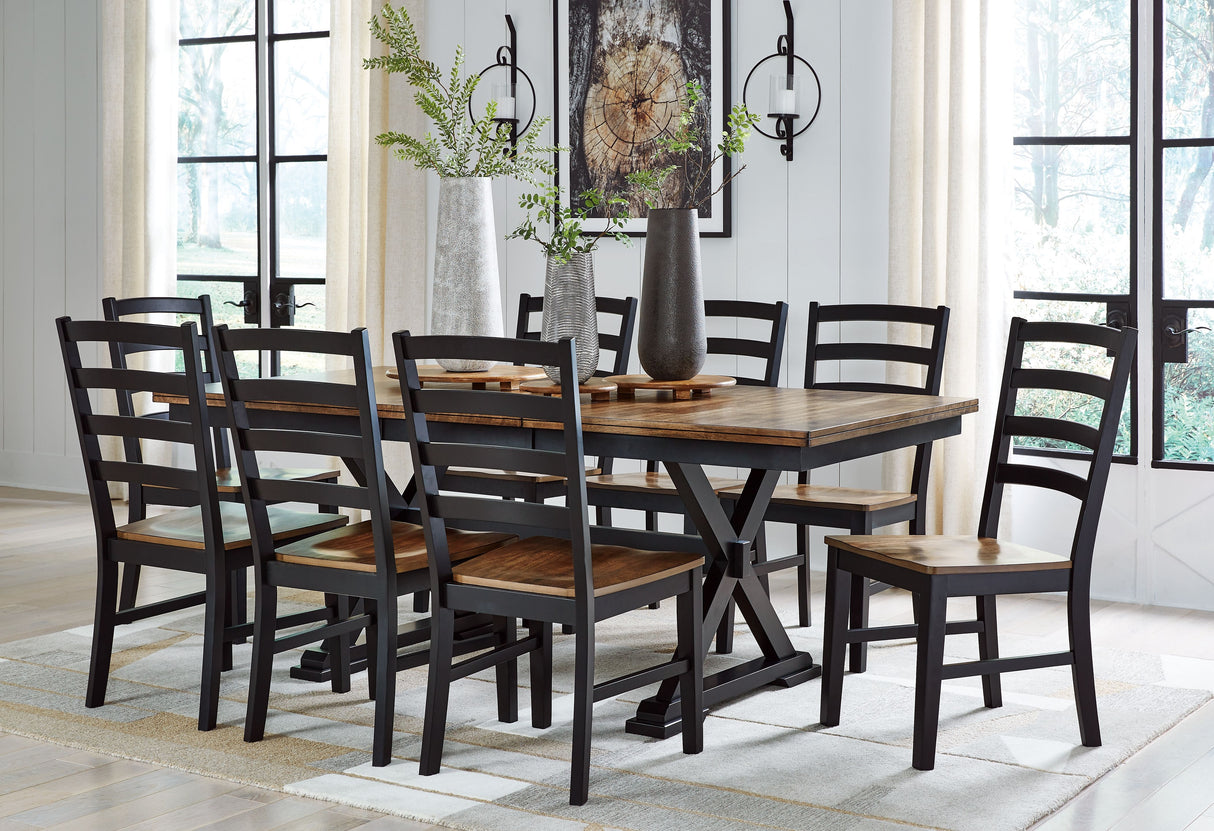
When you see a table advertised as seating for 6, 8, or 10, that number is based on assumptions about the chairs. Standard dining chairs range in width, but many are around eighteen to twenty inches wide. Narrow, armless chairs might be closer to sixteen to eighteen. Wide, upholstered chairs with arms can easily expand to twenty-two inches or more. When you slide several of these around a table, those differences add up.
The twenty-two to twenty-four inch per person guideline you saw earlier already assumes a reasonable chair width and a small bit of elbow room.
If you choose very generously scaled chairs everywhere, you may find that a “seating for 8” table feels more like comfortable seating for 6 plus two slightly tight spots at the ends. On the other hand, if you choose slimmer chairs or combine chairs with a bench, you may be able to accommodate an extra guest at the same table without discomfort.
Think about your mix of guests. If your holiday dinners routinely include several large adults who appreciate space at the table, it is better to plan your seating numbers conservatively, perhaps using a table that many guides would label as seating for 8 but aiming for 6 or 7 in real life. If you often have children at the table, a bench side becomes amazingly forgiving. Kids take up less physical space and are more flexible about sliding in and out, so you can often fit more little ones along a bench than you technically “should.”
Chair shape also influences how many people you can seat comfortably. Chairs with arms tend to demand more width and need a little extra breathing room at the sides, but they can be more comfortable for older guests and look more formal. Armless chairs save space and can be easier to tuck tightly around a table for bigger crowds. When you shop at Bel Furniture, it is worth experimenting with both types around the same table, especially if you imagine regally upholstered captain’s chairs at the ends and simpler side chairs along the long edges.

Holiday-Specific Considerations: Serving Style, Centerpieces, and Decor
Holiday meals are not like everyday dinners. They bring extra dishes, extra decor, and sometimes extra courses, all competing for limited real estate on your dining table. Your dining table size guide should therefore account not just for how many people you can seat but also for how you will use the center of the table.
If you prefer family-style meals, where platters and bowls stay on the table and are passed around throughout the meal, a table at the wider end of the standard range will make your life easier. Guides that recommend table widths of thirty-six to forty-eight inches for rectangular tables do so partly because a width of around forty inches or more gives you comfortable space for a line of serving dishes in the center while still leaving ample room for place settings on both sides.
At holiday time, when the turkey, ham, or main dish often lives on the table rather than on a separate buffet, this central strip becomes prime real estate.
If your style leans more toward buffet service, where most food stays on a sideboard or kitchen island and the dining table primarily holds plates, glasses, and perhaps one or two small decorative pieces, you may be able to get away with a slightly narrower table. In that case, your main concern is the space per person around the edge and the clearance around the table.
Centerpieces are another hidden size factor. A tall, elaborate centerpiece may look stunning in photos but can block sightlines across the table, making it harder for guests at opposite ends to talk. Low, linear centerpieces that run down the length of the table, such as greenery, candles in low holders, or a series of small arrangements, maintain the visual drama without eating up as much practical space. When Bel Furniture styles dining sets in the showroom for the holidays, we often use this approach: decor that runs with the length of the table and hugs the surface, leaving the air above the table open so people can see each other.
If you plan to add chargers under plates, multiple glasses per setting, or layered napkins and menu cards, remember that all of those accessories widen the footprint of each place setting slightly. At fancy holiday dinners, twenty-four inches per person really does feel more comfortable than twenty-two because there is simply more stuff in front of each guest.

Rugs, Lighting, and Proportion Around the Table
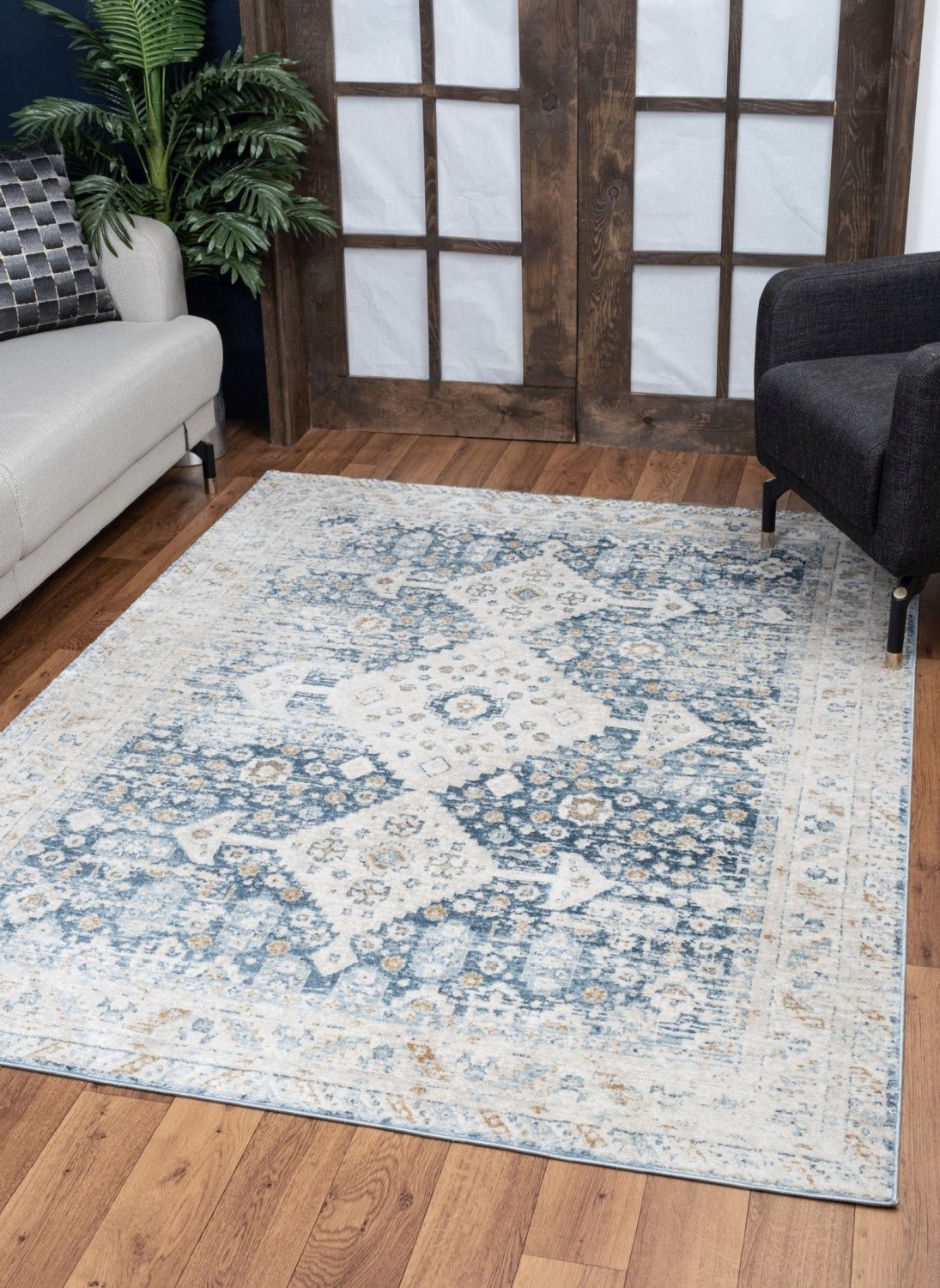
Although this guide focuses on the table itself, the elements around the table affect how big or small it feels in the room. A properly sized rug under the table can anchor the space and make a modest table feel more substantial, while the wrong rug size can either dwarf the furniture or make it look crowded.
Many design sources suggest that a dining room rug should be large enough that when chairs are pulled out, all of the chair legs still sit comfortably on the rug. To achieve that, the rug usually needs to extend about twenty-four inches beyond the table top in all directions.
If you have measured your room and chosen the largest rug that still leaves clear walkways, you can work backward from that rug size to confirm your table dimensions. For example, if your rug is eight by ten feet, subtracting two feet from each side gives you a rough maximum table footprint of approximately four by six feet that will still allow chairs to move.
Lighting, especially a chandelier or pendant above the table, should also feel in proportion to the size of your dining table. A long, narrow table under a tiny pendant may feel visually unbalanced, while a massive chandelier above a small four-person table can overpower the setting. Many designers talk about hanging the bottom of a light fixture roughly thirty inches above the tabletop, though exact heights can vary by ceiling height and fixture type.
When you are planning a new table from Bel Furniture, it can be helpful to imagine how your existing light fixture will look over it. If you are moving from a small round table to a longer rectangular one to achieve better seating for 8, you might also choose to update the fixture to a linear chandelier that echoes the table’s shape. The result will feel intentional and make your new holiday dining table feel like it truly belongs.
Matching Table Size to Room and Guest Count
To tie everything together, picture three more concrete examples that mirror the situations we see most often in Bel Furniture showrooms.
In the first example, a couple lives in a townhome with a combined living-dining space. Their dining area is defined by a wall on one side and an open hallway on the other, measuring about ten by nine feet. They typically eat with just the two of them but host parents and siblings for holiday meals, so they want a holiday dining table that offers seating for 6 without overwhelming the room. After measuring, they realize that subtracting six feet from each dimension gives them around four by three feet of safe table footprint if they are strict about clearance, but they can stretch a bit because one side opens into the larger space. They choose a rectangular extendable table that is sixty inches long by thirty-six inches wide in its compact form and extends to seventy-two inches when a leaf is added. For everyday use, the table comfortably seats four. For holidays, they add the leaf, bring in two extra chairs, and achieve seating for 6 that feels friendly but not cramped. Their dining table size guide in this case is shaped as much by the room as by the guest list.
In the second example, a family in a single-family home has a dedicated dining room measuring about twelve by eleven feet. They have three children and often invite grandparents or another couple over for Christmas dinner, so seating for 8 is their target. Using the same measurement guideline, they know their room will support a table around six feet long by about four feet wide without sacrificing clearance. They visit Bel Furniture and sit at several options, eventually selecting an eighty-four inch long rectangular table that is forty inches wide, paired with six side chairs and a bench. On ordinary days, they mostly use four chairs. On holidays, the bench goes on one side, three chairs on the opposite side, and a chair at each end. This gives them flexible seating for 8 while still leaving about three feet of space between the table and the buffet along one wall. Serving dishes live on the buffet, and the center of the table holds a low garland with candles.
In the third example, a large extended family treats one household as the central hub for Thanksgiving. Their dining room is generous, about fourteen by thirteen feet, and opens to a kitchen through a wide cased opening. Their current table is a fixed seventy-two inch model that technically seats 6 and squeezes to 8, but it never quite feels like enough. They measure and discover they can comfortably accommodate a table up to about eight feet long and still keep sufficient clearance around all sides. Using the twenty-four-inch per seat rule, they realize that a ninety-six inch table will support seating for 8 very comfortably and seating for 10 with slightly snugger spacing at the long sides. At Bel Furniture, they choose an extendable table that runs eighty-four inches for everyday meals and opens to ninety-six inches with a leaf. For weekly dinners, the table feels perfectly sized. For holidays, they extend it, pull in two extra chairs from the home office, and achieve the seating for 10 they have dreamed of without sacrificing circulation. They also select a wider forty-two inch top to keep room for platters down the middle of this true holiday dining table.
In each case, the families combine a clear-eyed understanding of their space and their guest list with the numbers and norms in the dining table size guide to make smart, realistic choices.

Bringing It All Together with Bel Furniture
Choosing the right dining table size for holiday gatherings is not about memorizing a chart. It is about understanding a few key principles and then applying them to your own room, your own guests, and your own traditions. You begin by thinking honestly about how you host: whether you want everyone seated at once and whether your goal is seating for 6, seating for 8, seating for 10, or more. You then measure your dining area, subtracting enough space for comfortable walkways so chairs can be pulled out and people can move easily. You learn that most adults need roughly twenty-two to twenty-four inches of table edge to eat comfortably and that rectangular tables for six often live in the sixty to seventy-two inch length range, tables for eight in the seventy-two to ninety-six inch range, and tables for ten beyond that.
You consider shape: rectangular tables that line up with the room, round tables that encourage conversation in cozier spaces, oval tables that soften edges while still delivering long runs of seating, square tables that make sense in more compact or square rooms. You think about whether an extendable table can give you the best of both worlds: a right-sized everyday table that transforms into a true holiday dining table when the leaf goes in. You remember that chairs matter and that bench seating can help when several of your holiday guests are children.
Along the way, you blend numbers with feel. You look beyond the seat count printed on a tag and imagine how a three-hour holiday meal will feel for the person at each spot. You picture platters down the center of the table, the glow of a centerpiece, the way a rug frames the setting and a chandelier pools light over it. You make sure there is enough clearance for an older relative to push back their chair and stand up without bumping into a wall.
Bel Furniture exists to make those decisions easier and more enjoyable. In our showrooms, you can stand around a table in person, count chairs, slide them closer together, and see how seating for 6, 8, or 10 feels in real life. You can explore rectangular, round, oval, and square tables in a variety of lengths and widths, compare compact fixed tables with generous extendable ones, and pair them with chairs and benches that suit both your style and your space. Our goal is not just to sell you a table; it is to help you bring home the right dining table size for the way your family celebrates.
This holiday season, as you picture the people who will gather at your table, imagine how it could feel when the size is just right. Imagine guests sitting down without jostling, dishes fitting comfortably in the center, and the room feeling full but not crowded. With a clear understanding of dining table dimensions, seating for 6/8/10, and the realities of your room, you can choose a holiday dining table from Bel Furniture that turns those imagined scenes into memories you will treasure for years.


