

Texas winters have a way of keeping you on your toes. One weekend feels like patio season with sunshine and a light breeze, and then a cold front sweeps through with rain, wind, and temperatures that drop fast. Even when it isn’t freezing, winter in Texas still puts outdoor furniture through a lot—moisture that hangs around longer than you expect, sudden temperature changes that stress finishes, and wind that can turn a simple cover into a sail.
That’s why January is such a smart time to focus on outdoor furniture care. It’s the month when people start noticing what the cooler season has been doing: cushions that don’t feel as fresh, frames that look a little dull, and surfaces that seem harder to keep clean. It’s also when many Texans start planning for the outdoor months ahead—because in Texas, outdoor living doesn’t wait until spring. You’ll get plenty of days that feel good enough to enjoy your patio, and the goal is to be ready when those days show up.
At Bel Furniture, we see this firsthand across Texas—families refreshing patios in Houston, San Antonio, and Corpus Christi, and homeowners everywhere else doing the same thing: figuring out how to keep outdoor sets comfortable and good-looking without turning maintenance into a second job. The good news is you don’t need complicated routines. Most winter damage comes down to a few predictable issues, and once you understand them, protecting your outdoor furniture becomes simple and realistic.

The real enemy isn’t cold—it’s moisture that lingers
A lot of people assume winter damage happens only when it gets very cold. In Texas, that’s not usually the main problem. Outdoor furniture can handle getting wet. What it doesn’t like is staying wet—especially when days are cooler and the sun doesn’t dry things as quickly as it does in summer.
Lingering moisture is what leads to the most common winter issues: mildew in cushions, odor that won’t go away, rust spots on metal hardware, and a general “worn” look that seems to appear overnight. Moisture also mixes with debris—leaves, pollen, dust—and creates little pockets where water sits longer. Even a simple layer of wet leaves on a chair seat can hold dampness against fabric for days.
The best winter protection mindset is straightforward: don’t panic about rain or dew, but do focus on drying. If your furniture can dry quickly and completely after it gets wet, you’ll prevent most long-term problems.
Outdoor cushions: the first thing that usually goes wrong
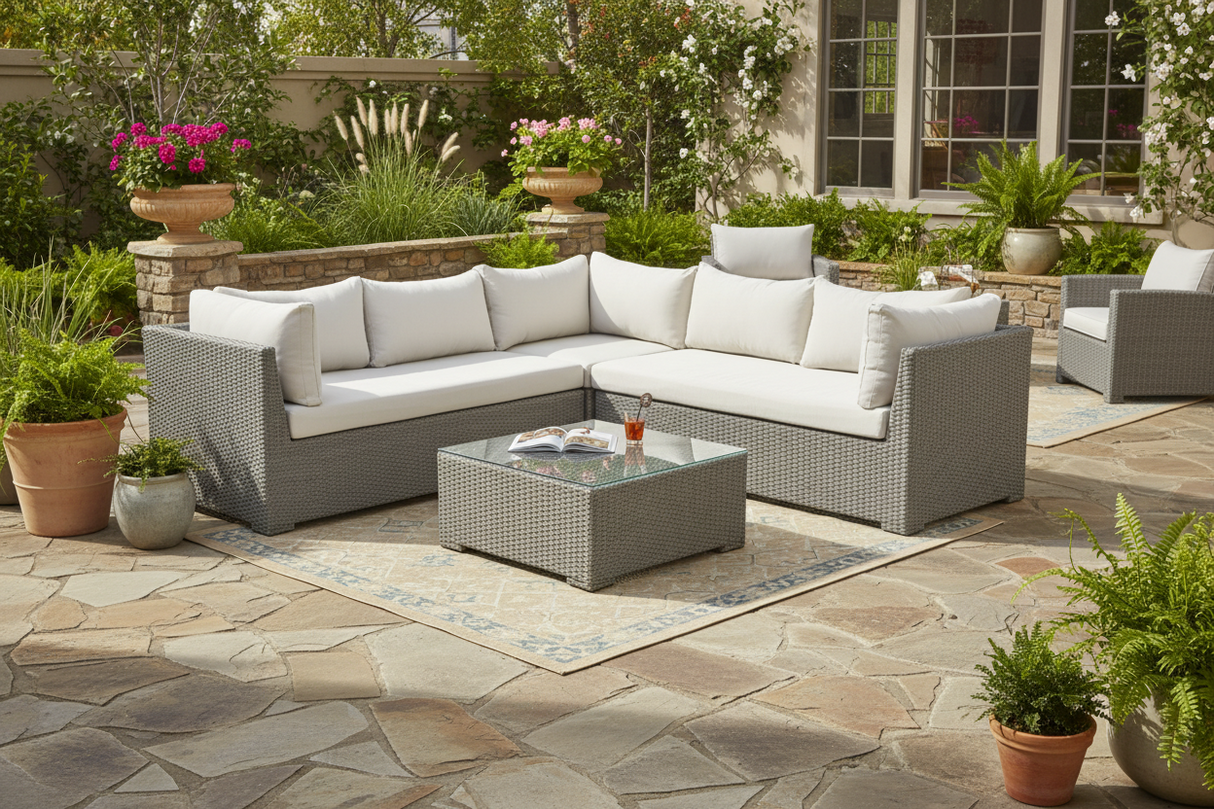
If you want to protect one thing this winter, protect your cushions. Cushions are comfortable, but they’re also layered, which means moisture can hide inside even when the surface feels dry. That hidden moisture is exactly what leads to mildew and that musty smell that makes a patio feel less inviting.
In January, it helps to stop thinking of cushions as “outdoor-proof” and start treating them like “outdoor-capable.” They’re designed to handle the outdoors, but they still need good habits—especially in a Texas winter where you might get a rainy stretch followed by cloudy days.
After rain or heavy dew, give cushions time to breathe. If the weather clears, standing them upright for a while can make a surprising difference because it increases airflow around the fabric. If you have a covered patio, don’t assume everything is protected—covered spaces can still stay humid. Airflow matters more than roof coverage.
And here’s the biggest cushion mistake people make: covering cushions while they’re still damp. It feels like the responsible thing to do, but it can trap moisture and create a warm, humid pocket where mildew starts. If you’re going to cover furniture, it’s best to do it when cushions are fully dry, or to store cushions separately during especially damp weeks.
Storage doesn’t have to be complicated. If you have an outdoor storage bench or deck box, cushions can live there when you’re not using them. If you don’t, even a laundry room corner or closet during a rainy stretch can keep them fresher and extend their lifespan. The goal is simple: fewer days spent sitting damp.

Covers that actually protect (instead of trapping problems)
Outdoor furniture covers are one of the best tools you can use in a Texas winter, but covers work best when they protect from water while still allowing airflow. A cover that seals everything tightly can create condensation underneath, especially when temperatures change overnight. That condensation acts like constant moisture—and it’s the kind that never “looks” dramatic but quietly causes mildew and corrosion over time.
Breathability matters. A cover should block rain and debris, but it should also avoid turning your furniture into a greenhouse. Fit matters too. If the cover is too loose, wind can lift it and push water underneath. If it’s too tight, it can pull against corners and seams and wear out faster. The best covers look neat and secure, but not stretched to the point where they can’t breathe.
Another detail that makes a big difference is water pooling. If rain creates a dip on top of the cover where water sits, that area stays wet longer and keeps the surface underneath damp. The solution is often simple—adjusting the cover, tightening straps, or creating a gentle “peak” so water runs off instead of collecting.
Used correctly, a cover reduces winter cleaning, protects finishes from grime, and helps keep furniture ready for those sunny Texas days that pop up all winter long.
Material matters: care depends on what your furniture is made of
Outdoor furniture isn’t one thing—it’s a combination of frames, finishes, fabrics, and hardware. Winter care gets easier when you treat each material with the kind of attention it needs.
If your furniture has aluminum frames, you’re in a strong position for Texas weather because aluminum resists rust. Winter care becomes mostly about keeping it clean and preventing grime from building up in joints and corners where moisture can sit.
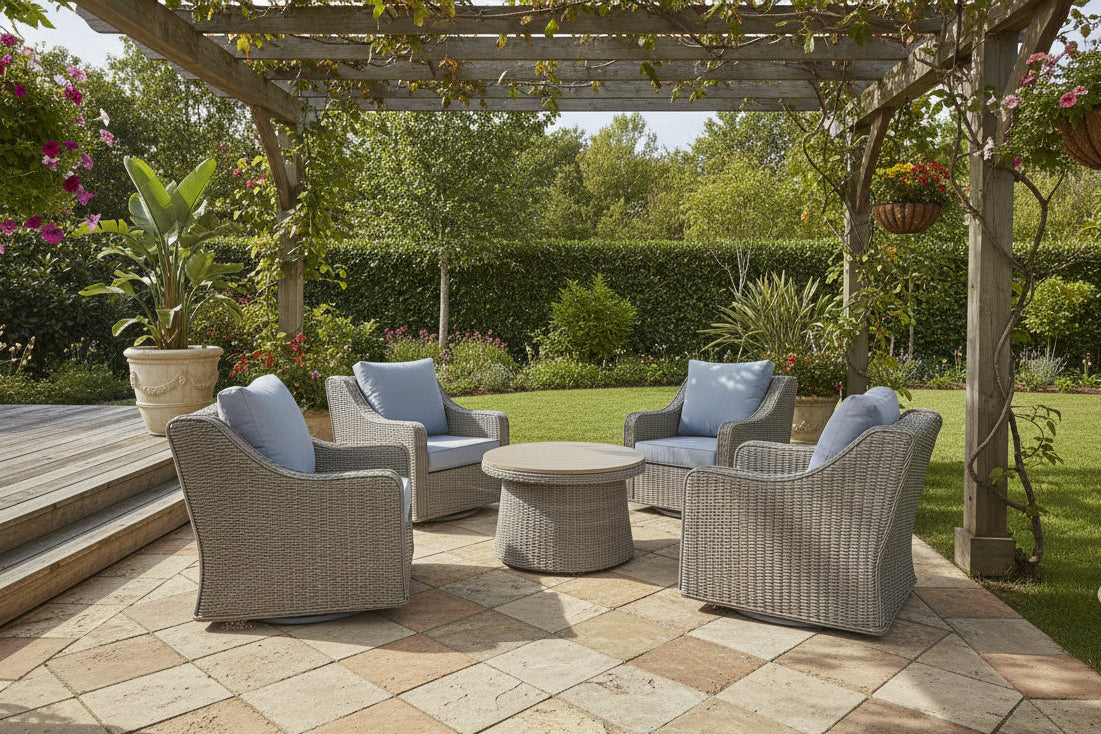
If you have resin wicker, it generally handles winter well, but the cushions still do the heavy lifting. Wicker frames can stay looking great while cushions quietly collect moisture. Keeping cushions dry and letting air move through the seating area is what keeps the whole set feeling fresh.
If your patio set includes steel or iron, moisture management becomes more important. These materials can be sturdy and beautiful, but they’re more vulnerable to rust when dampness lingers—especially around bolts, feet, and seams. Winter is the season to keep an eye on early signs, because small spots are much easier to manage than widespread corrosion later.
Wood outdoor furniture can be a great fit for Texas style, but it responds to moisture and temperature changes. The key for wood is keeping it clean, letting it dry fully after rain, and avoiding covers that trap dampness directly against the surface. Wood does better when it can breathe.
And outdoor fabric is its own category. Even high-quality outdoor fabric performs best when it’s kept free of debris and allowed to dry thoroughly. Leaves and dust can trap moisture right where you sit, and once that moisture hangs around for a few days, it can leave behind odor or mildew spots that are frustrating to remove.
The bigger idea is that good winter care isn’t about scrubbing constantly. It’s about preventing “long wet periods” and keeping surfaces clean enough that water doesn’t get trapped.

A January routine that doesn’t feel like a chore
Most Texans don’t want to pack up their patio for months, and you don’t need to. Instead, think of winter care as a quick reset that you do after the weather has been rough.
After a rainy stretch or windy week, take a few minutes to clear debris and check cushions. If cushions feel damp, give them time to dry fully before you cover the set. If covers have shifted, re-secure them so water doesn’t pool and wind doesn’t lift edges. If you notice grime building up in corners or along frame joints, a simple wipe-down keeps moisture from sitting in those spots.
This kind of light routine is exactly what keeps outdoor furniture looking “well kept” instead of “weathered.” It also makes the patio more inviting. You’re much more likely to sit outside on a random sunny January afternoon if the furniture looks clean and smells fresh.

When it’s smarter to upgrade instead of fighting your furniture
Sometimes, winter care isn’t the problem—your furniture has simply reached the point where it needs more effort than it should.
Cushions that never fully bounce back, fabric that holds odor even after drying, frames that wobble, or rust that keeps returning are signs your set is no longer performing the way you need it to. And the longer you fight it, the more it feels like your patio is a project instead of a place to relax.
Upgrading doesn’t have to mean starting over from scratch. Sometimes a refresh is enough: replacing cushions, choosing a more weather-friendly material for your region, or selecting a set that handles moisture and daily use better. The best outdoor furniture for Texas is the kind that still feels comfortable and looks good even after real weather—not just perfect showroom conditions.

Keep your patio ready for Texas living
Outdoor time is part of Texas life. It’s weekend grilling, evening conversations, watching the sky change colors, and enjoying those mild winter days that show up when you least expect them. Protecting outdoor furniture in winter isn’t about doing everything perfectly—it’s about moisture awareness, airflow, smart covers, and keeping cushions from staying damp too long.
When you’re ready to refresh your patio—whether it’s replacing worn pieces, upgrading to a more durable set, or simply finding outdoor furniture that fits your space and your style—Bel Furniture makes it easy to shop your way. You can browse online anytime, and you can also visit Bel Furniture showrooms across Texas to compare materials, test comfort, and choose what feels right in person—including locations in Houston, San Antonio, and Corpus Christi.
Because the best patio isn’t the one that only looks good in perfect weather. It’s the one that stays comfortable, clean, and ready—no matter what a Texas winter decides to do next.


